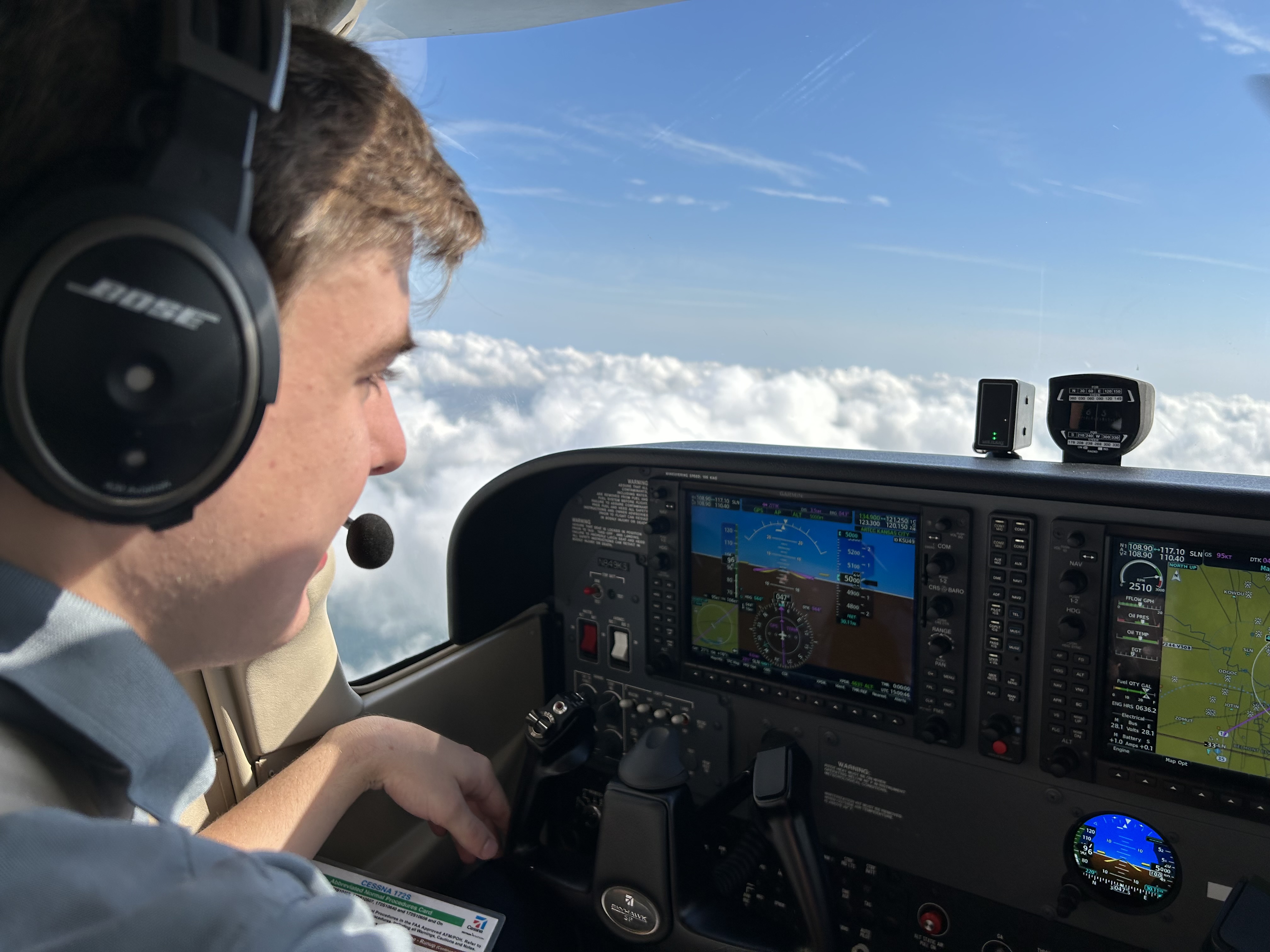
FAA Instrument Rating
The Instrument Rating is an add-on qualification that allows you to fly under Instrument Flight Rules (IFR) and in Instrument Meteorological Conditions (IMC). It is widely considered the single most important rating for pilot safety and the gateway to professional aviation.
Eligibility & Prerequisites
Before beginning Instrument Rating training, applicants must meet the following requirements under 14 CFR §61.65:
Hold a Private Pilot Certificate
You must hold at least a current Private Pilot Certificate (or be concurrently applying for one). The instrument rating is added to your existing pilot certificate.
Current Medical Certificate
A current Third-Class Medical Certificate (or higher) or BasicMed is required.
Pass the Instrument Knowledge Test
Pass the FAA Instrument Rating Airplane knowledge test (IRA) with a score of 70% or higher within the 24 calendar months preceding your practical test.
What You'll Learn During Instrument Training
Instrument Navigation & Avionics
Master precision navigation using modern GPS units, VORs, Victor airways, and electronic flight displays without relying on outside visual references.
IFR Procedures & Clearances
Learn to fly Standard Instrument Departures (SIDs), STARs, holding patterns, and instrument approaches seamlessly across the National Airspace System.
Aviation Weather & Decision Making
Develop expert skills in interpreting METARs, TAFs, icing forecasts, and radar data to make accurate go/no-go decisions for IFR flights.
Instrument Scan & Aircraft Control
Develop a rapid, precise instrument scan technique to maintain strict aircraft control and altitude management solely by reference to instruments.
FAA Part 61 Minimum Aeronautical Experience
The Federal Aviation Administration establishes minimum aeronautical experience and training requirements under 14 CFR §61.65. Additional flight instruction hours may be completed to reach full checkride proficiency.
50 Hours Cross-Country PIC Time
Accumulate at least 50 hours of cross-country flight time as Pilot in Command (PIC), including at least 10 hours in airplanes.
40 Hours Actual or Simulated Instrument Time
Log at least 40 hours of actual or simulated instrument time, using approved aircraft or FAA-certified flight training devices (FTD/ATD).
15 Hours Instrument Flight Instruction
Receive at least 15 hours of dual instrument flight instruction from an authorized Instrument Flight Instructor (CFII).
250 NM IFR Cross-Country Flight
Complete an IFR cross-country flight of at least 250 nautical miles along airways or ATC-directed routing, with an instrument approach at each airport.
3 Different Instrument Approach Types
Perform instrument approaches at three different airports using varied navigation systems (e.g., ILS, RNAV/GPS, VOR) during training.
Regulatory References: 14 CFR §61.65 and FAA Instrument Rating Airplane ACS (FAA-S-ACS-8).
Steps to Earning Your Instrument Rating
Instrument Ground School & Written Exam
Build core theoretical knowledge on instrument charts, regulations, weather theory, IFR flight planning, and pass the FAA Instrument Rating Knowledge Test.
Basic Attitude Instrument Flying
Master controlling the airplane under the hood (simulated instrument conditions) while developing your instrument scan.
IFR Airspace & ATC Navigation
Learn how to plan and fly: instrument routes, instrument approaches, holding patterns, and practice communicating with Air Traffic Control for clearances and route amendments.
Cross-Country IFR Approaches
Fly long-distance IFR cross-country flights, practice precision ILS and non-precision RNAV/GPS approaches.
FAA Practical Test (Checkride)
Demonstrate your skills to a Designated Pilot Examiner (DPE) during the oral exam and flight test to officially earn your Instrument Rating.
Maintaining Instrument Currency
After earning your instrument rating, you must maintain instrument currency under 14 CFR §61.57(c) to exercise IFR privileges. Within the preceding 6 calendar months, you must have performed and logged:
6 Instrument Approaches
Six instrument approaches flown in actual or simulated instrument conditions, either in an aircraft or an approved flight simulator/training device.
Holding & Intercepting/Tracking
Holding procedures plus intercepting and tracking courses through the use of navigational electronic systems. If currency lapses, an Instrument Proficiency Check (IPC) is required.